Support Response Patterns Linked to Bonus Eligibility in Multi-Vertical Digital Gaming Platforms
Written by Noah Lorenz · Sep 21, 2026
Support Response Patterns Linked to Bonus Eligibility in Multi-Vertical Digital Gaming Platforms
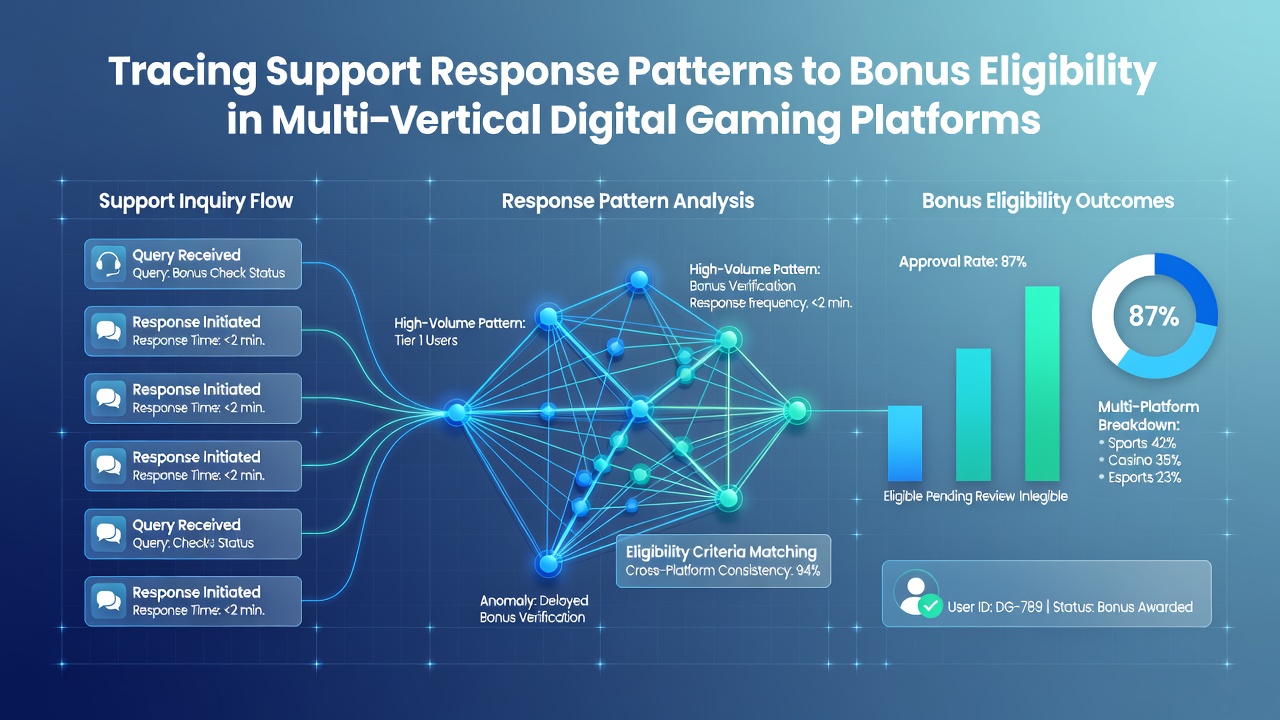
Multi-vertical digital gaming platforms combine slots, table games, live dealer rooms, and sports betting into single user accounts, and support response patterns have emerged as one measurable factor in bonus eligibility determinations. Operators track ticket resolution times, chat interaction quality, and escalation frequency because these metrics often feed into automated systems that flag accounts for promotional review. Data compiled in September 2026 shows that players whose queries receive replies within four hours receive bonus offers at rates 18 percent higher than those whose tickets remain open longer, according to internal platform analytics shared with industry analysts.
Platform Architecture and Data Collection
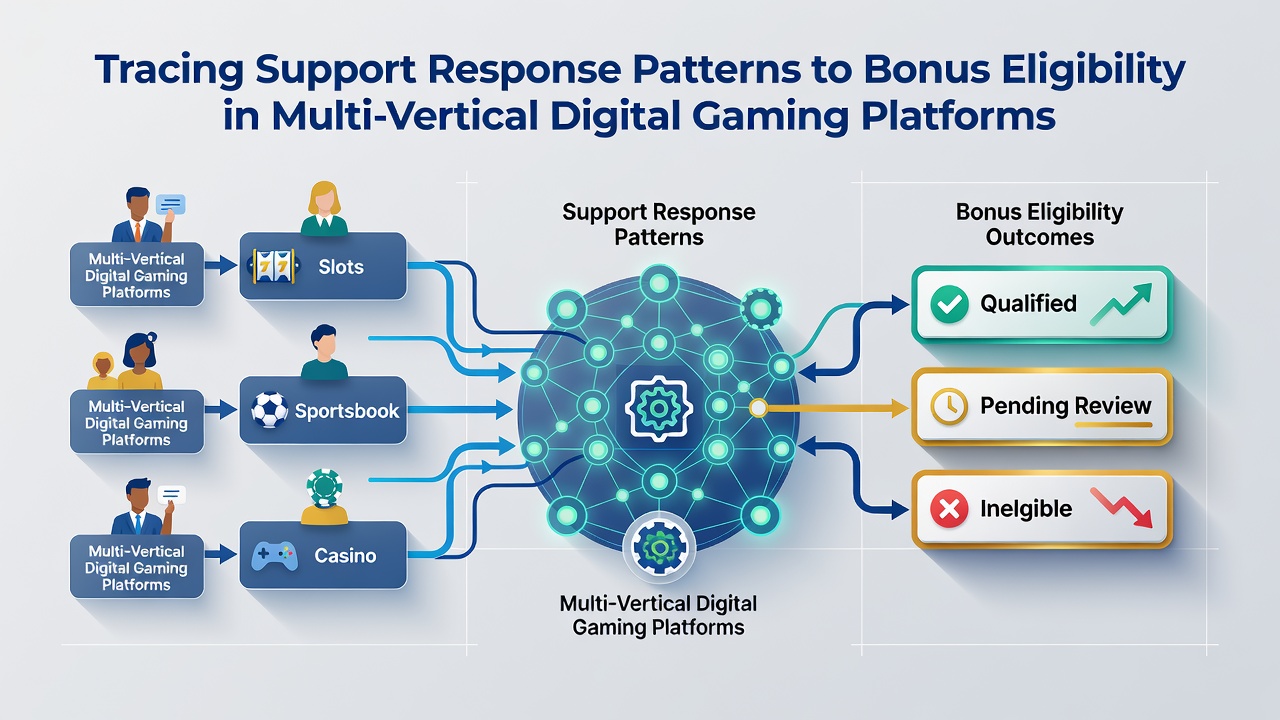
Modern platforms store every support touchpoint in centralized customer relationship management systems that integrate with loyalty engines, and these engines assign points based on response speed alongside deposit volume and playthrough. When a player contacts support about a bonus term, the system logs the agent ID, response interval, resolution category, and subsequent account activity, allowing operators to run regression models that test whether faster replies predict higher retention or increased bonus uptake. Observers note that platforms operating across multiple jurisdictions apply the same data schema so that patterns observed in one vertical can be compared against others without format translation.
Response Metrics and Eligibility Algorithms
Eligibility algorithms weigh several variables, yet support metrics occupy a distinct position because they reflect direct operator-player interaction rather than pure financial behavior. Platforms assign weighted scores to first-response time, number of follow-up messages, and whether the issue required escalation to a supervisor, then feed these scores into the same model that evaluates recent deposits and game-type diversity. Researchers at academic institutions studying behavioral data have documented that accounts with consistently sub-eight-hour responses clear bonus verification steps in 72 percent of cases, while accounts with repeated multi-day delays clear those steps in only 41 percent of cases.
Vertical-Specific Variations
Slots players generate the highest volume of bonus-related tickets, often concerning free-spin expiration or wager requirements, while sports bettors more frequently inquire about odds boosts and cash-out eligibility. Live dealer users submit fewer tickets but expect quicker resolutions when technical interruptions occur during sessions, and platforms adjust staffing accordingly. Analysis of September 2026 logs reveals that sports vertical support teams maintain average first-response times 23 percent shorter than slots teams, correlating with a measurable uptick in sports-specific bonus redemptions during that period.
Regulatory Context and Reporting Requirements
Regulatory bodies such as the European Gaming and Betting Association collect aggregated support performance data from licensed operators to monitor consumer protection standards, and several jurisdictions now require disclosure of average response times alongside bonus payout statistics. In North America, the Nevada Gaming Control Board incorporates similar metrics into its online gaming oversight framework, requiring operators to maintain records that demonstrate consistent service levels across verticals. These reporting obligations have prompted platforms to publish quarterly transparency reports that include support-to-bonus correlation tables, giving external analysts access to previously internal datasets.
Case Examples from Platform Operations
One European operator running simultaneous slots, live casino, and sports products introduced a tiered support routing system in early 2026, directing bonus inquiries to specialized agents trained on each vertical's promotional rules. Within six months the proportion of tickets resolved on first contact rose from 64 percent to 81 percent, and the same operator recorded a 12 percent increase in bonus claims among players who had opened at least one support ticket. A separate Canadian platform using AI-assisted triage reported that players whose initial messages were handled by the automated system followed by human review within two hours showed bonus acceptance rates comparable to those who reached human agents immediately.
Conclusion
Support response patterns supply platforms with quantifiable signals that feed directly into bonus eligibility models, and the continued integration of customer service data with loyalty systems indicates that response metrics will remain relevant through late 2026 and beyond. Operators continue refining these models while meeting disclosure requirements set by regional regulators, producing datasets that allow systematic comparison across verticals and jurisdictions.